Sep 25, 2011

Sep 22, 2011

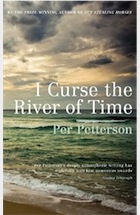
I CURSE THE RIVER OF TIME by Per Petterson

source: Words Without Borders
Reviewed by Mythili G. Rao

“He’s thirty-seven years old, but I wouldn’t call him a grown up.  That would be an exaggeration.  He’s getting a divorce.  I don’t know what to do with him.” These words, spoken by protagonist Arvid Janson’s weary mother in the final pages of Per Petterson’s latest novel, I Curse the River of Timeare an apt assessment.  Newly diagnosed with stomach cancer, Arvid’s mother has left Norway for her hometown in Denmark, and Arvid, burdened with a host of ailments of his own, has followed her, his intentions unclear even to himself. Arvid wants to console and support his mother, (“Damn it, I knew she was ill, she might even die; that was why I was here, that was why I had come after her, I was sure of it,”) but not only is there an old, open wound of misunderstanding between  mother and son to contend with, there is also the creaking failure of Arvid’s fifteen-year marriage weighing on him, as well as the final collapse of his political ideals to reconcile with:

“‘It’s me,’ I said.
‘I know who it is,’ she said. I heard your thoughts clatter all the way down from the road. Are you broke?’”

“Are you broke?” is the question Arvid’s mother used to playfully ask her son while he was still a carefree, penniless college student—before he dropped out of school to put his faith in Communism to test, trading an education for a production-line job at the factory where his father had labored for a lifetime, and leaving his mother (a factory worker herself) incensed. Arvid settled easily into the physical rhythms of the job and was convinced that the act of work was inherently important, but it did not take long for him to see that he had “joined the proletariat which did not actually exist anymore, but was an anachronism.” In breaking with the promise of his old life, he had become “a man out of time.”

Petterson has written about Arvid Jansen before. In the Wake finds its protagonist grappling with the horrific death of his parents and younger brothers in a ferry accident just like the one that took the lives of Petterson’s own parents and two of his three brothers two decades ago. The Arvid Jansen of I Curse the River of Time may still have two living parents and more than one living brother, but his story is still an unflinchingly dark one.   read more....

Sep 18, 2011

MISS PEREGRINE'S HOME FOR PECULIAR CHILDREN by Ransom Riggs

source: Stainless Steel Droppings
By

Several years ago I recall poo-pooing the concept of the book trailer. Experience has taught me that the quality of those early trailers had a lot to do with my assumptions about their value and effectiveness. That said, I had not been swayed to buy a book based on a book trailer. That all changed when the trailer for Ransom Riggs’ debut novel found its way to me on Twitter.

I watched it…


And I was lost…

It is easy for a young boy to believe the tales woven by a loving grandfather–of monsters, a magical home, and children with amazing powers. But as that boy matures his grandfather’s tales develop the taint of untruth and what once seemed so very real is now nothing more than fairy stories. So what if his grandfather had pictures of these children, pictures that in childhood were quite convincing? To the boy’s eye these photos now appear faked, doctored, impossible. And so the grandfather stopped telling the stories and a special bond was lost. Then one night tragedy struck and the now adolescent boy saw something–something that should not be real, could not be real. That one night will send the boy on a journey in which he discovers that truth is sometimes stranger, and scarier, than fiction. read more...

Sep 17, 2011

THE HIDDEN CHILD by Camilla Läckberg

source: Nordic Bookblog 
review by Peter 

The Hidden Child (original title Tyskungen) is the fifth novel in Camilla Läckberg’s bestselling Swedish crime fiction series, and the sequel to The Gallows Bird.

Like many Swedish fathers, Detective Patrik Hedstrom has chosen to take a paternity leave to stay home for awhile with his one year old daughter Maja. His wife, Erica Falck, wants to spend this time writing a new crime book. However, they both have a hard time adjusting to the new situation. Erica has discovered her mother’s wartime diaries in her attic, along with a mysterious Nazi medal and a blood-stained baby shirt. Curious to learn more, she consults a local World War II historian about the medal and begins to read her mother’s diary.

Soon after, the ageing historian is found brutally murdered in his house, where he lives alone with his brother – a man engaged in the worldwide hunt for Nazi war criminals. Why has the historian been killed now, so long after the war? Did he represent a threat to the growing Neo-Nazi movement in Sweden? Did he have knowledge of long-hidden secrets from the war years in Sweden?  read more....

Sep 14, 2011

Is this the end for books?

source: The Guardian
by

Avid Reader
From books to bytes … Willis's bookshop in Edinburgh, 1955. Photograph: John Murray/Getty Images

In 1996, the US computer entrepreneur Brewster Kahle set up the Internet Archive, its mission being to provide "universal access to all knowledge". This admirable project strives to store copies of every single web page ever posted: a ghostly archive of the virtual. So what are we to make of the fact that, a decade and a half later, this digital pioneer is turning from bytes to books? In what seems, on the face of it, an act of splendid perversity, Kahle has set up a series of converted shipping containers in California where he hopes to create another archive – one that contains a copy of every book ever published.

His action touches on an anxiety. Are books, like defunct internet pages, heading towards the point where they will be archived as an academic curiosity? Some think so. You won't find any shortage of people willing to pronounce the printed book doomed, arguing that the convenience and searchability of digital text and the emergence of a Kindle-first generation will render them obsolete.

Certainly, electronic books have overcome their technological obstacles. Page turns are fast enough, battery life is long enough, and screens are legible in sunlight. Digital sales now account for 14% of Penguin's business. But there are reasons to reject the idea that the extinction of the printed book is just around the corner, just as there were reasons to reject the notion that e-books would never catch on because you couldn't read them in the bath and, y'know, books are such lovely objects.  read more...
 

Sep 6, 2011

THE CAT'S TABLE by Michael Ondaatje

source: The Telegraph 
By Beth Jones

Towards the end of Michael Ondaatje’s 1982 memoir, Running in the Family, is a chapter entitled “Harbour”. Describing the luxury liners, the blue tugs and the Maldive fishing vessels that skim out into the thick night air from Sri Lanka’s main port, the author recalls a “frail memory dragged up out of the past”: it is the early Fifties and he is going to the harbour to say goodbye to a family member at dusk.

It is the briefest of chapters, a mere 200-odd words, yet faint crepuscular memories are sketched with such deftness that it’s impossible not to imagine sailing out into the night upon dark infinite waters.

Turn the opening pages of Ondaatje’s sixth novel, The Cat’s Table, and this harbour landscape greets the mind’s eye once more. The narrator, Michael, is remembering himself as a boy of 11 waiting for the ocean liner Oronsay to sail from Colombo docks. This time he is a passenger himself, travelling alone on the 21-day voyage to England.

Each day of the crossing he dines at the cat’s table, Table 76, “the least privileged place” in the ship’s dining room, shared with a cast of misfits including two other boys, Ramadhin and Cassius. Exploring the ship, going where young boys shouldn’t, the three soon learn that what’s important “happens mostly in secret, in places where there is no power”. read more....

Sep 5, 2011

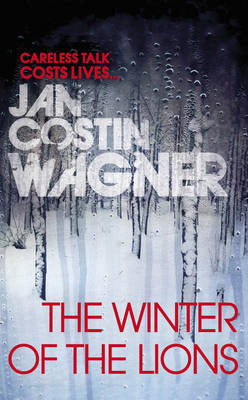
THE WINTER OF THE LIONS by Jan Costin Wagner

source: The Random House Group

Every year since the tragic death of his wife, Detective Kimmo Joentaa has prepared for the isolation of Christmas with a glass of milk and a bottle of vodka to arm himself against the harsh Finnish winter. However, this year events take an unexpected turn when a young woman turns up on his doorstep.

Not long afterwards two men are found murdered, one of whom is Joentaa’s colleague, a forensic pathologist. When it becomes clear that both victims had recently been guests on Finland’s most famous talk show, Kimmo is called upon to use all his powers of intuition and instinct to solve the case. Meanwhile the killer is lying in wait, ready to strike again…

In Kimmo Joentaa, prizewinning author Jan Costin Wagner has created a lonely hero in the Philip Marlowe mould, who uses his unusual gifts for psychological insight to delve deep inside the minds of the criminals he pursues.

Jul 5, 2011

The Paperback Game

taken from the New York Times
written by


Here’s what you’ll need to play: slips of paper (index cards work well), a handful of pencils or pens and a pile of paperback books. Any sort of book will do, from a Dostoyevsky to a Jennifer Egan, and from diet guides to the Kama Sutra. But we’ve found it’s especially rewarding to use genre books: mysteries, romance novels, science fiction, pulp thrillers, westerns, the cheesier the better. If you don’t have well-thumbed mass-market paperbacks in your house, you can usually buy a pile from your library, or from a used-book store, for roughly 50 cents a pop.

Many people flee from games they fear will be public I.Q. tests or will expose gaps in their literary knowledge — their inability to differentiate between, say, Lily Bart and Isabel Archer, or between John Barth, Roland Barthes and Donald Barthelme. This is not that kind of game. A little learning helps. But I’ve seen precocious preteenagers wipe the floor with fairly elite published writers. Which is another way of saying that even nonmandarins can play the paperback game and sometimes win.

Once you’ve gathered your loved ones at the table — 4 to 10 is optimal — and opened fresh bottles of wine and perhaps put on an old Ry Cooder record, here is how the game unfolds. One player, the “picker” for this turn, selects a book from the pile and shows its cover around. Then he or she flips it over and reads aloud the often overwrought publisher-supplied copy on the back cover.

Hearing these descriptions read aloud is among the game’s distinct joys. Here is one example, from the back cover of a paperback titled “Paradise Wild” (1981), by Johanna Lindsey. Try to imagine the following recited in the voice of the fellow who does the husky voice-overs for coming attractions in theaters, or by your slightly tipsy best friend:

“A well-born Boston beauty, Corinne Barrows has traveled halfway around the world in search of Jared Burkett — a dashing rouge and a devil; a honey-tongued charmer who seduced and despoiled her ... and then abandoned the impetuous lady after awakening a need that only he could satisfy. She has found him on the lush and lovely island of Hawaii.” This goes on, but you get the idea.

One reason it’s less fun to play with serious rather than genre novels is that their back covers tend to contain phrases like “sweeping meditation on mortality and loss” rather than “a need that only he could satisfy.”
The other players absorb these words, and then write on their slips of paper what they imagine to be a credible first sentence for Ms. Lindsey’s novel. Essentially, they need to come up with something good — or bad — enough to fool the other players into thinking that this might be the book’s actual first sentence. Players initial their slips of paper and place them upside down in a pile at the center of the table.

Meanwhile the picker — the person who read the back cover aloud — writes the book’s actual first sentence on another slip of paper. He or she collects all the slips, mixing the real first sentence with the fakes, and commences to read each one aloud. Each person votes on what he or she thinks is the real first sentence. read more...

Jul 3, 2011

THE BOOK OF EVERYTHING by Guus Kuijer

taken from Nine Kinds of Pie - Philip Nel's Blog

Kuijer, The Book of Everything
“What do you want to be when you grow up?”
“Happy,” said Thomas. “When I grow up, I am going to be happy.”
 

Nine-year-old Thomas sees things that others don’t, like “tropical fish swimming in the canals,” thousands of frogs massing outside his house, and the loveliness of sixteen-year-old Eliza, who has “an artificial leg made of leather” and seems to understand him. Guus Kuijer’s The Book of Everything (2004, translated by John Nieuwenhuizen, 2006) is a brief, beautiful tale of Thomas losing faith, making friends with his sister and Mrs. van Amersfoort, gaining confidence in himself, and learning to resist his father’s bullying.  The prose is lyrical, the images are magical realist, and the story is full of wisdom and humor.  Here is a passage when Thomas, visiting Mrs. van Amersfoort, listens to Beethoven for the first time (the second sentence refers to her cat, who has been napping on a globe):

His ears started ringing again. The globe started spinning, cat and all. When he was about to draw Mrs. van Amersfoort’s attention to this, he saw that her heavy chair was floating above the floor like a low cloud. He barely had time to take this in when he felt the chair he was sitting in rising slowly, as if strong hands were lifting it. He wanted to shout with joy, but when he saw Mrs. van Amersfoort’s intent face, he realized that, with this music, it was normal for chairs to float. (19)

I love how this translates Thomas’s sense of wonder into a literal, physical experience. Kuijer does not tell us that Beethoven’s music makes them feel as if they were floating. Instead, they just float, borne upward in their chairs, drifting like low clouds. Beautiful.

The Book of Everything won the Flemish Golden Owl Award, but is not widely known in this country. It’s really, really good. I highly recommend it. I suspect that, once you read it, you’ll recommend it, too.

Jun 28, 2011

THE TROLLS by Polly Horvath

taken from best-chilrens-book.com, review by Sarah Denslow

Meet storytelling Aunt Sally

The eccentric aunt: pretty much everyone has one (at least pretty much all fictional characters), and the Anderson kids are no exception.

Now that Aunt Sally is really coming to stay with them, though, (and not just stay, but actually take care of the kids while their parents are in Paris) Melissa, Amanda, and Pee Wee are about to find out just what this aunt, who sends them Christmas cards with a picture of a moose every year, is really like.

Melissa is ten, the oldest, and “always knows everything”; Amanda is eight and “often knows everything”; Pee Wee is six and “knows nothing” (at least in the estimation of his sisters. Pee Wee does, however, provide a good deal of comic relief prior to the arrival of Aunt Sally by continually wondering if the children will be sent to a kennel when their babysitter has to cancel, due to contracting a case of the bubonic plague.

Mom and Dad aren’t nuts about leaving Aunt Sally with the care of their three offspring, but they can’t find anyone else, and there are those non-refundable tickets to Paris to consider. Mom leaves a very detailed list of what the children need to do, including suggested vegetables for each day of the week, and then they’re off.

Aunt Sally proves to be both an interesting and loquacious adult. She ensures that the children will eat their green beans by eating her own with such gusto and creativity (including pantomiming knitting with two) that the children can hardly stand not to eat them and entertains them with stories of growing up in Vancouver.

The stories are wonderfully entertaining, if just a bit incredible, and include a hilarious story of Great-uncle Louis trying to get Aunt Sally’s brother to eat his vegetables by chasing him down with a handful of the things. But if his childhood in Canada was so wonderful, why, Melissa and Amanda to know, doesn’t their dad ever talk about Vancouver himself?

Well, says Aunt Sally, it might have something to do with the Trolls. What trolls? Aunt Sally says she’ll tell Melissa and Amanda, but they mustn’t let Pee Wee hear because he might get nightmares.  read more....

Jun 17, 2011

STATE OF WONDER by Ann Patchett


This is the background to the arrival of a letter that ignites Orange Prize-winning American novelist Patchett’s exhilarating if overheated work. Some weeks earlier, Anders had been sent to the Amazon to report on the work of a reclusive but brilliant doctor, Dr Swenson, who has spent decades studying a tribe whose womenfolk continue to bear children into their seventies. The company which employs Marina and Anders pays for her research, and is frustrated at the time it’s taking the doctor to produce results. Anders needs to find out why she is taking so long. The letter, however, contains dreadful news. It is from Dr Swenson, informing them Anders has died.

Marina is a homebody, attached to Minnesota, despite her Indian heritage, as if by chains. It is a measure of her fidelity to her friend and his grieving widow, and of her innate biddability that when Mr Fox asks her to go to Brazil and learn what happened, and how the uncommunicative doctor’s work is going, she agrees. What follows is a compellingly taut story in which a series of adventures containing vivid individuals throws up profound revelations.

Patchett is a highly empathetic writer, subtle in her characterisations and in her portrayal of strong attachments, unbidden feelings and the complications that attend both.

Marina emerges as a truly delightful and admirable heroine, a woman whose story one would like to follow beyond this book. As she investigates Anders’s death, she is obliged to confront her own past when, as a promising young doctor, she made a terrible mistake. That incident not only crippled her professionally but, it appears, emotionally too. This trauma is linked to Dr Swenson, which makes Marina’s trip doubly courageous.

One can’t but wonder, though, why a woman who willingly braves the Amazonian interior, with its cannibal tribes, its alphabet of snakes, spiders and insects, and a fanatical doctor, would have been so easily derailed in her earlier life.

The Amazonian forest is as unwelcoming as Dr Swenson: “At dusk the insects came down in a storm, the hard-shelled and soft-sided, the biting and stinging, the chirping and buzzing and droning, every last one unfolded its paper wings and flew with unimaginable velocity into the eyes and mouths and noses of the only three humans they could find.” Yet it is in the terrifying isolation of this wildly dangerous environment that Marina proves what she is made of.

Here, as in other novels, Patchett explores the nature of love and duty, and the huge responsibilities those small words carry. A pellucid, droll writer, she reveals her Tennessee upbringing in a penchant for drama that verges on the gothic. Where she fails to convince, for this reader at least, is in her portrait of the Amazon settlement. This setting, with its enigmatic tribe and their peculiar habits, gives rise to such extreme turns of event, it’s as if one has crossed a line from literary fiction into boy’s own territory. Added to which, the hinge on which Patchett’s plot turns is not hard to predict. This does not spoil one’s pleasure, but it diminishes the novel’s power. It is no small feat, then, for Patchett to surmount her over-egged plot to create a tender, affecting and memorable novel.

Jun 13, 2011

MY TATTOOED DAD by Daniel Nesquens & Magicomora

taken from Last Gasp

A young boy describes what life is like when his dad comes home -- how he fries up chicken samosas for dinner, how he makes jokes and fools around, and how he carries him off to bed when he is sleepy. His dad also tells wonderful stories of his adventures in far-off lands, often inspired by his many, many exotic tattoos. His letters to his son are also full of great stories about the past -- what the first date with his mother was like (it included a visit to a fortune teller and a bizarre circus) and about how the boy's life was saved twice by this very same dad -- once when he was stolen from his baby basket by a dog and once when he flew out the car window. But as his mother says, his dad has ants in his pants, which means he's often not around. Still, life rolls along with one fantastical tale after another, in good times and bad. And this is this extraordinary father's gift to his child -- the life of the imagination -- which is always with him, even when his father is not. The illustrations have a nostalgic, underground graphic-novel style feel to them that perfectly complements the very original text. Ages 4-8.

Daniel Nesquens is a prolific, award-winning author who has written books for children and young adults, many of them available in either bilingual or Spanish editions in North America, including Caminando sobre el alambre, Como pez en el agua, D?as de Clase / School Days (Sopa de Libros / Soup of Books), Papa tenia un sombrero / Dad Had a Hat (Sopa De Libros / Soup of Books) and Mi familia / My Family. Several of his books have been listed in the White Ravens Catalogue and have been recognized by Venezuela's Banco del libro in "Los mejores libros para ni?os y j?venes" (the best books for children and youth). He lives in Zaragoza, Spain.

Magicomora is one of the most important pop surrealist artists in Spain and has exhibited his work all over the world. He is also a children's book illustrator with more than fifteen books to his credit. The Spanish edition of My Tattooed Dad was named best children's book by the Association of Illustrators of Catalonia. Magicomora lives in Barcelona, Spain.

Jun 8, 2011

TWELVE STEPS TOWARDS POLITICAL REVELATION by Walter Mosely

taken from Perseus Academic

In his late teens and early twenties, Walter Mosley was addicted to alcohol and cigarettes. Drawing from this intimate knowledge of addiction and recovery, Mosley explores the deviances of contemporary America and describes a society in thrall to its own consumption. Although Americans live in the richest country on earth, many citizens exist on the brink of poverty, and from that profound economic inequality stems self-destructive behavior.

In Twelve Steps to Political Revelation, Mosley outlines a guide to recovery from oppression. First we must identify the problems that surround us. Next we must actively work together to create a just, more holistic society. And finally, power must be returned to the embrace of the people.

Challenging and original, Recovery confronts both self-understanding and how we define ourselves in relation to others.


About the Author

Walter Mosley is the author of more than thirty-four critically acclaimed books, including the bestselling mystery series featuring Easy Rawlins. He is the winner of an O. Henry Award, a Grammy, and PEN America's Lifetime Achievement Award. He lives in New York City.

Jun 6, 2011

THE DOGS OF ROME by Connor Fitzgerald

taken from the San Francisco Book Review reviewed by Leslie Wolfson
 
A sloppy and seemingly random murder is committed in Rome, clearly the work of an amateur. But of course, things are more complicated than they appear. Upon closer inspection, the victim turns out to be an anti-dog- fighting crusader who has exposed an illegal ring run by a local gangster. What’s more, the victim’s wife is a politician, and his mistress is the daughter of a high-ranking Mafioso.


Alleva was dead, Massoni was dead, and Blume could hear exhilaration in Paolini’s tone.  Revenge and reprieve all at once.

Enter Alec Blume, a police commissioner who is an American but has lived in Rome since his teens. Alec’s parents were murdered in a bank robbery gone bad, which gives him a cynical outlook on life. Blume is not your typical cop; he is sarcastic with co-workers and supervisors, he is overly zealous and far from suave when approaching women, and spends part of the book in a sling, awkwardly pursuing the bad guys when he should be home in bed. All of these traits make him a flawed but likable hero.

All of the players in the novel come across as completely believable, because the author avoids the stereotypical, and emphasizes the quirkiness in both large and small characters. The fast-moving plot has several interesting twists, and the tone is tongue-in-cheek. This is the first in a series of Commissario Blume novels, and anyone who reads this one will be looking forward to the next.

Jun 3, 2011

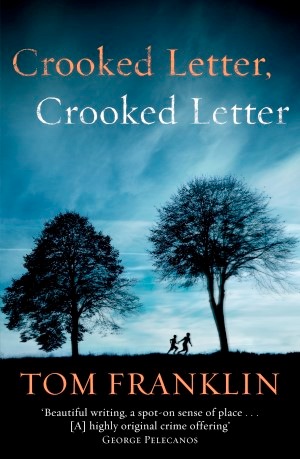
CROOKED LETTER, CROOKED LETTER by Tom Franklin

taken from Paste Magazine

The remarkable, painterly writer Susan Straight told me once that literary novelists are tiny rowboats next to the ocean liners of popular culture. “We’re rowing our leaky little skiffs like mad,” she said, “as we bail with a coffee can; and meanwhile there goes the giant Stephen King cruise ship or the James Patterson aircraft carrier, fully lit, the music playing, the passengers peering down at us from on high.”
So Tom Franklin just got a bigger boat.

Up until the latter part of the 20th century, literary fiction drove American book sales. Our great writers—Hemingway, Steinbeck, Faulkner, Cather, Fitzgerald—were the engines of enterprise for the New York publishing houses, and the groundbreakers for the culture, too. A new book by one of the big modern American literary lions meant that a cultural event had occurred, and sales followed.

Now, many of our literary writers have largely been relegated to the commercial backwaters, with just a few exceptions like Jonathan Franzen; and the genre writers have become the big ships. Stieg Larsson, ahoy. Thrillers, mysteries, science fiction, uh huh, even romances—those are the novels that now displace the most commercial and cultural water. Whether this means a wholesale dumbing-down of our culture or a welcome relief from navel-gazing, nothing-happens-twit-lit—well, you decide. But what has occurred means something very serious for those wretched scribes among us who face the keyboard and the blank page every day—it means that most writers who want to both keep writing and continue eating now feel the compulsion to pen a genre novel that can become a series that builds an audience and a brand.

It used to be shocking when a literary giant came down from the mountaintop and wrote genre fiction, but now it’s commonplace. In his last two books, Cormac McCarthy, one of our greatest living authors, wrote a mystery (No Country for Old Men) and an apocalyptic science fiction novel (The Road) that both sold quite well, were optioned and produced handsomely by Hollywood and allowed McCarthy to finally buy the house his many previous literary novels had failed to provide, thank you.

Tom Franklin may be embarking on the same path. read more....