taken from MATERIAL WITNESS
Finland has been notably under-represented in the surge of Nordic crime fiction that has take the genre by storm in recent years. While Icelanders, Swedes and Norwegians have risen to prominence few Finnish authors have broken into international markets.
This has been a personal disappointment to me. Having spent a lot of time in Finland, and grown to like it and the Finns very much, I have long been waiting for a writer to bring the country to life on the crime scene.
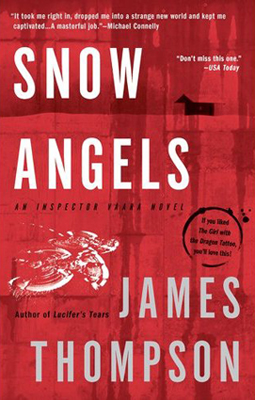
So it was with the greatest of pleasure that I discovered James Thompson and his debut novel Snow Angels, set in FInnish lapland during Kaamos, the bleak, black Polar midwinter during which the sun does not rise at all for several days.
It is a good starting place and time for a writer exploring Finland and taking it to a new audience. Light and heat are perhaps the two most dominant characteristics of the country to a newcomer: in the winter there is an alarming lack of both - even in southern parts such as Helsinki; in the summer there is a surfeit of the latter. It is impossible not to wonder what impact the long dark winters has on those living here.
Thompson, a long-term resident, sets his story up handsomely to examine this question and others about the Finns, and Snow Angels, which is essentially a terrific mystery novel, explores some of these themes primarily through the dynamic between the central character, police detective Kari Vaara, and his American wife Kate, who is enduring her first Finnish winter as a manager in the Arctic ski resort of Levi. Vaara sees the Finns as they see themselves, while Kate provides the outsiders view. read more....
Apr 12, 2011
Apr 11, 2011
A VERY PRIVATE MURDER by Stuart Pawson
taken from Meanstreets
Charlie Priest is on gardening leave - the neighbours have complained about his weeds – when the call comes. Ghislaine Curzon, girlfriend of one of the royal princes, is in Heckley to open the Curzon Centre, a new shopping mall and conference facility. But as she reveals the commemorative plaque at the opening ceremony it looks like someone has got to it first, defacing it with a single obscene word in foot-high red letters. The visiting dignitaries are aghast, and the chief constable insists on Charlie investigating the case.
Charlie would rather be investigating the burglaries perpetrated by a two-man gang armed with a pit bull terrier, but he welcomes the opportunity to meet Ghislaine at the family’s stately home in East Yorkshire. The jollities cease, however, when the mayor of Heckley is found dead.
The subsequent investigation involves Charlie visiting the mayor’s diminutive, flute-playing wife; the manageress of the mall and her anarchist student son; a half blind jockey and a cornucopia of characters from the rich farmland of East Yorkshire. It’s going to take more than standard police procedure to crack this case.
Charlie Priest is on gardening leave - the neighbours have complained about his weeds – when the call comes. Ghislaine Curzon, girlfriend of one of the royal princes, is in Heckley to open the Curzon Centre, a new shopping mall and conference facility. But as she reveals the commemorative plaque at the opening ceremony it looks like someone has got to it first, defacing it with a single obscene word in foot-high red letters. The visiting dignitaries are aghast, and the chief constable insists on Charlie investigating the case.
Charlie would rather be investigating the burglaries perpetrated by a two-man gang armed with a pit bull terrier, but he welcomes the opportunity to meet Ghislaine at the family’s stately home in East Yorkshire. The jollities cease, however, when the mayor of Heckley is found dead.
The subsequent investigation involves Charlie visiting the mayor’s diminutive, flute-playing wife; the manageress of the mall and her anarchist student son; a half blind jockey and a cornucopia of characters from the rich farmland of East Yorkshire. It’s going to take more than standard police procedure to crack this case.
Apr 9, 2011
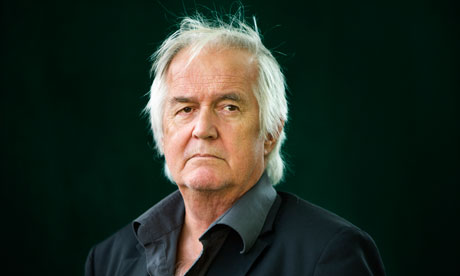
THE TROUBLED MAN by Henning Mankell
taken from THE GUARDIAN
That's it then; the end. Twenty-two years after his first appearance and more than a decade since the one everybody - even his creator - had assumed would be his last, Inspector Kurt Wallander is working his last case.
The lugubrious, all too human but ultimately decent Swedish cop with the never-ending health problems and the terrible family life has sold 30m books in 45 different languages. This will be a sad day for a lot of people.
But not, on balance, for Henning Mankell. "Hand on heart," he says, "I thought I'd written his last adventure a long time ago. I don't even particularly like the man. We have certain things in common: we enjoy the same kind of music, we have a similarly conscientious approach to work. We wouldn't be enemies if we knew each other, but he wouldn't be a close friend. He's not someone I'd invite to dinner."
We're in the sunlit kitchen of the house Mankell owns with his wife Eva in old Antibes, in the south of France. Coffee and cakes from the local patisserie are on the table. Eva, a successful theatre director in Sweden and daughter of Ingmar Bergman, disappears upstairs to work. Mankell, rumpled and relaxed in T-shirt and black tracksuit of uncertain vintage and indiscriminate design, listens gravely and answers precisely. The Troubled Man, his 10th and final Wallander novel, is published here this week. read more....
That's it then; the end. Twenty-two years after his first appearance and more than a decade since the one everybody - even his creator - had assumed would be his last, Inspector Kurt Wallander is working his last case.
The lugubrious, all too human but ultimately decent Swedish cop with the never-ending health problems and the terrible family life has sold 30m books in 45 different languages. This will be a sad day for a lot of people.
But not, on balance, for Henning Mankell. "Hand on heart," he says, "I thought I'd written his last adventure a long time ago. I don't even particularly like the man. We have certain things in common: we enjoy the same kind of music, we have a similarly conscientious approach to work. We wouldn't be enemies if we knew each other, but he wouldn't be a close friend. He's not someone I'd invite to dinner."
We're in the sunlit kitchen of the house Mankell owns with his wife Eva in old Antibes, in the south of France. Coffee and cakes from the local patisserie are on the table. Eva, a successful theatre director in Sweden and daughter of Ingmar Bergman, disappears upstairs to work. Mankell, rumpled and relaxed in T-shirt and black tracksuit of uncertain vintage and indiscriminate design, listens gravely and answers precisely. The Troubled Man, his 10th and final Wallander novel, is published here this week. read more....
IT'S A BOOK written & illustrated by Lane Smith
taken from Powell's Books
Playful and lighthearted with a subversive twist that is signature Lane Smith, It's a Book is a delightful manifesto on behalf of print in the digital age. This satisfying, perfectly executed picture book has something to say to readers of all stripes and all ages.
The perfect gift for the tech-weary child (or adult) in your life. Bold illustrations, simple text, and a barrelful of wit will remind readers of the joys to be found when you go offline and lose yourself in the pages of a favorite story. Recommended by Billie Bloebaum, Powell's Books at PDX
new fairly traded hand made baskets in stock
Red Telegraph
Red Telegraph sources fairly traded products made by women in developing countries. We work with organisations that are committed to breaking the cycle of poverty by training and employing the most disadvantaged women in their regions. By buying one of our products you are helping to support their efforts to establish poverty-free societies across the world.
Apr 6, 2011
A NOVEL BOOKSTORE by Laurence Cossé
taken from WORDS WITHOUT BORDERS by Emma Hamilton
A new bookstore opens in Paris and stirs up a culture war. Ivan, a career bookseller and Francesca, a socialite and passionate reader, decide to open an "ideal bookstore"—one in which only good books are sold. They call it simply "The Good Novel." And before long, the place experiences phenomenal sales as well as violent threats, all the while receiving massive press coverage—by turns, adulatory and vituperative.
In an age of plummeting book sales, daily hardship (and ruin) for independent bookstores, and a publishing industry whose future seems grim, the plot of A Novel Bookstore could only be the fantasy of an undeterred bibliophile. In this alternate universe, books are at the forefront of cultural consciousness and debate. Even in France, a country more protective of its high culture than our own, the situation is only slightly more plausible. For all its utopian indulgences, the novel does turn on a familiar, and emblematic, tension. The escalating war over the bookstore has, at its heart, a clash between "literature" and the business of publishing. Of course, literature is a loaded category. Nabokov (whose entire oeuvre is sold at the store) once wrote that "reality" was one of the few words that means nothing without quotation marks. I'd hazard that "literature" is another. For what is literature except books that have been deemed, by someone, good and important? READ MORE....
Apr 5, 2011
THE STRANGE CASE OF THE COMPOSER AND HIS JUDGE by Patricia Duncker
taken from THE TELEGRAPH by Jake Kerridge
The story of the Heaven’s Gate group, 39 of whose members killed themselves in California in 1997 in the belief that this would allow their souls to board an alien spaceship, is recommended reading for anybody who thinks that the premise of Patricia Duncker’s new novel is too outlandish. It concerns an outbreak of suicides among the Swiss members of a cult who worship an astral body in the constellation Auriga they call the Dark Host and believe to be a herald of the Apocalypse.
But there is a twist in Duncker’s tale. The cult members are not the usual saddos but Switzerland’s scientific and artistic elite, including its chief global- warming adviser and best-known television astronomer; to appreciate the effect this has, we have to imagine Nicholas Stern, Patrick Moore and the whole of the Royal Society jumping off the roof of the Greenwich Observatory.
The novel begins with the discovery in a forest in the Jura of the corpses of 16 people, arranged in a semicircle. André Schweigen, a petulant French cop, notes similarities to a mass suicide in Switzerland some years earlier and summons his colleague and lover, Dominique Carpentier, a judge known as “la chasseuse de sectes”, the cult hunter. She is a rational thinker who tracks down the ageing smoothies who set up bogus sects in order to fleece the gullible. READ MORE....
Subscribe to:
Posts (Atom)