May 28, 2011

THE PRINCE OF MIST by Carlos Ruiz Zafron

taken from independent.ie


In 2004, the Spanish author Carlos Ruiz Zafon earned international success and acclaim with his breakthrough novel The Shadow Of The Wind. His books have since sold over 15 million copies worldwide.

But before he wrote this bestselling debut novel for adults, he had already published four books in Spanish for younger readers. The first of these, The Prince Of Mist, has just been translated into English for the first time.

The Prince Of Mist is set in Spain during the Second World War and is the story of 13-year-old Max Carver and his family, who move from the city to the countryside to get away from the war.

But from the moment Max steps off the train, he has a creepy feeling about the seaside town. The clock in the old train station appears to be moving backwards and the house Max and his family move into has been boarded up for years because of its sad history. The overgrown garden is populated by stone statues that appear more lifelike than they should, and a secret stash of homemade films reveal even darker secrets. Then there is the malevolent cat who seems to be stalking the family.

When Max and his older sister Alicia meet a local boy, Roland, whose grandfather Victor Kray has run the lighthouse for 25 years, they discover the wreck of an old ship beneath the sea and the story of the prince of mist slowly begins to unravel. Soon Max discovers that the prince, a magician known only as Cain, is still in their midst and just waiting for his opportunity to settle an old score.

This first book by Carlos Ruiz Zafon is a chilling adventure and skips along at a fantastic pace. It's probably a little too scary for very young readers but older fans of Zafon's other work will certainly enjoy this novel.
All the familiar themes of his later books are here.

He writes fondly of father-and-son relationships, as well as of the importance of older male mentors to young men, along with the themes of coming of age, burgeoning romance, loss of innocence, and the ultimate battle of good versus evil.

Any young reader will enjoy The Prince Of Mist, but it is particularly enjoyable for fans of Zafon, as it gives an insight into the early ideas and preoccupations that eventually led to his most successful novel, The Shadow Of The Wind.

May 23, 2011

SWAN PEAK by James Lee Burke

taken from The Guardian by Matthew Lewin

After the devastating events of hurricane Katrina in New Orleans, Cajun police detective Dave Robicheaux and his unpredictable ex-partner Clete Purcel have headed for the achingly beautiful landscape of the Bitterroot Valley in Montana to fish. But Burke cannot allow these two characters to exist in a peaceful world, and it's not long before they are embroiled in an investigation into the brutal killing of two young students a stone's throw from their holiday cabins. As always, Clete Purcel is a natural magnet for trouble, and it comes in increasingly powerful waves. Burke has cunningly woven a thread through the various loops in the plot, and when he begins to draw it all in, the compression raises the temperature to almost unbearable levels. The last 30 pages had me gripped with tension. This, together with Burke's ability to place you vicariously in the haunting landscapes he describes with such love and passion, again confirms his position as one of the finest American writers.

May 22, 2011

HOW THE SOLDIER REPAIRS THE GRAMOPHONE by Saša Stanišić

taken from Book Forum by Ross Benjamin

Writers have long used a child’s perspective to relate fictional accounts of historical catastrophe, notably Günter Grass in The Tin Drum and Imre Kertész in Fatelessness. Bosnian-born German author Sasa Stanisic offers the latest installment in this tradition with his 2006 debut novel, How the Soldier Repairs the Gramophone, a sensation in Germany, now skillfully translated by Anthea Bell. Through the eyes of the fourteen-year-old narrator, Aleksandar Krsmanovi, we witness a massacre perpetrated by Bosnian Serbs against their Muslim neighbors in the town of Višegrad in 1992. The outlines of the plot are autobiographical: The protagonist’s escape to Germany from the attack on Višegrad parallels the author’s own at the same age. But rather than rendering a direct account, Stanisic refracts these events through his young narrator’s wildly imaginative storytelling. A hyperactive fabulist, Aleksandar embarks on madcap flights of invention and comic exaggeration, which clash movingly with the painfully real chronicle of terror, loss, and exile at the story’s heart.

His tall tales contain many wonders: a magic wand that can “revolutionize all sorts of things, just so long as they’re in line with Tito’s ideas and the statutes of the Communist League of Yugoslavia”; a catfish wearing glasses; a river that talks and is ticklish. The headings that precede each chapter playfully mimic Cervantes and Grimmelshausen by providing brief, tantalizingly eccentric synopses: “How long a heart attack takes over a hundred meters, how heavy a spider’s life weighs, why a sad man writes to the cruel river, and what magic the comrade-in-chief of the unfinished can work.”

Aleksandar learns the answer to the first in this series of conundrums when his Grandpa Slavko suffers cardiac arrest in the same 9.86 seconds in which Carl Lewis breaks the world record for the hundred meters; the race is playing on Slavko’s television. Unwilling to accept his grandfather’s death, Aleksandar recalls Slavko’s gift to him of a magician’s hat and wand that “work magic exclusively along Party lines.” But even though he believes that the resurrec-tion of such a devoted Socialist would surely receive Tito’s blessing, he proves powerless to bring Slavko back to life. Defiantly proclaiming himself opposed to death and all endings, he resolves to become “Comrade-in-Chief of going on and on,” to think up stories that never end, and to draw pictures of unfinished things. His “unfinished” subjects are among the novelist’s idiosyncratic strokes: “plums without stones,” “Tito in a T-shirt,” “books with no dust on them.”      read more....

May 20, 2011

DRAWING CONCLUSIONS by Donna Leon

taken from italian-mysteries.com

"It's about a suspicious death that might be violent, might not be, that is, might be murder, might not be. Brunetti follows the trail and finds old people with secrets from long ago. It's not bad.
(© Donna Leon, August 13, 2010)


In the opening pages of a debut novel nearly two decades ago, a nasty conductor was poisoned during intermission at the famous La Fenice opera house in Venice. The Questura sent a man to investigate, and readers first met Commissario Guido Brunetti.

Since 1992’s Death at La Fenice, Donna Leon and her shrewd, sophisticated, and compassionate investigator have been delighting readers around the world. For her millions of fans, Leon’s novels have opened a window into the private Venice of her citizens, a world of incomparable beauty, family intimacy, shocking crime, and insidious corruption. This internationally acclaimed, best-selling series is widely considered one of the best ever written. Atlantic Monthly Press is thrilled to be publishing Drawing Conclusions, the 20th installment, in Spring 2011.

Late one night, Brunetti is suffering through a dinner with Vice Questore Patta and his nasty Lieutenant Scarpa when his telefonino rings. A old woman’s body has been found in a Spartan apartment on Campo San Giacomo dell’Orio. Her neighbor discovered it when she went to pick up her mail, after having been away in Palermo. Brunetti sees some signs of force on the old woman—the obvious wound on her head, what could be a bruise near her collarbone—but they could just as easily have been from the radiator near where she fell. When the medical examiner rules that the woman died of a heart attack, it seems there is nothing for Brunetti to investigate. But he can’t shake the feeling that something may have created conditions that led to her heart attack, that perhaps the woman was threatened.

Brunetti meets with the woman’s son, called into the city from the mainland to identify the body, her upstairs neighbor, and the nun in charge of the old age home where she volunteered. None of these quiet his suspicions. If anything, the son’s distraught, perhaps cagey behavior, a scene witnessed by the neighbor, and the nun’s reluctance to tell anything, as well as her comments about the deceased’s “terrible honesty,” only heighten Brunetti’s notion.

With the help of Inspector Lorenzo Vianello and the ever-resourceful Signorina Elettra Zorzi, perhaps Brunetti can get to the truth, and find some measure of justice.

Like the best of her beloved novels, Drawing Conclusions is insightful and emotionally powerful, and it reaffirms her status as one of the masters of literary crime fiction.
(© Atlantic Monthly Press)

May 18, 2011

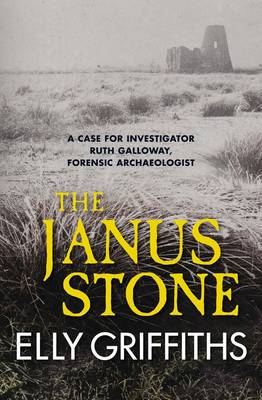
THE JANUS STONE by Elly Griffiths

taken from EURO CRIME


I have been really looking forward to this, the second in a series featuring Ruth Galloway, a forensic archaeologist, based in East Anglia. The first book, THE CROSSING PLACES, was a delight and I have to say I wasn't disappointed with this one.

Ruth is called in when builders, demolishing an old house in Norwich, find the bones of a child beneath a doorway. The skull is missing, so is it a ritual sacrifice or just plain murder? DCI Harry Nelson needs to know. When it turns out that the house was once a children's home everyone begins to wonder what went on there. Nelson tracks down the priest who ran the home and finds that two children did go missing there years ago.

Harry and Ruth have to find out how old the bones are and trawl through the old files to find out who was involved in a crime that happened many years before. However it seems that not everyone wants the truth to come out and someone is trying to frighten Ruth off.


What a fantastic book this is. The characters of Ruth and Harry are so clear and believable. Ruth in particular is extremely engaging, full of self-doubt but battling on regardless. Harry is a most unusual fictional detective, not given to talking much, a man with a heart. I love the relationship between these two. But the secondary characters here are no stereotypes either, from the wonderful Cathbad to the saintly Father Hennessey all the supporting cast are finely drawn.


Plot-wise it will keep you guessing, and the use of present tense throughout means that the action is very immediate. You feel as though you're right there with them. The tension never falls and it builds to a fantastically gripping climax. This is a real tour-de-force and I just can't wait for more.

May 16, 2011

ON THE BLACK HILL By Bruce Chatwin

taken from The New York Times

BRUCE CHATWIN'S highly praised travel book, ''In Patagonia'' (1977), established the writer as, among other things, a connoisseur of human oddity as it flourishes in isolation. His displaced Scottish sheep farmers and Welsh hymn singers, left stranded by the receding tide of economic colonialism, are depicted as turned in upon themselves, rendered queer by their desperate clinging - in the remote wastes of the Argentinian far-south - to obsolete modes and attitudes transplanted a century ago from ''Home.'' Even more bizarre are the descendants of Dom Francisco da Silva, a Brazilian slave trader, who - as Mr. Chatwin tells us in his semihistorical fantasy, ''The Viceroy of Ouidah'' (1980) -founded a mulatto dynasty in the bloodthirsty kingdom of Dahomey. In both works the human peculiarities are set against landscapes poetically evoked with exceptional vividness and exactitude.

The step from such nonfiction to Bruce Chatwin's first novel is not so great as might be imagined. ''On the Black Hill'' also chronicles the lives of odd folk living in relative isolation; it too paints a landscape which, as in the novels of Thomas Hardy, is at least as animate and moody as its inhabitants. But there the resemblance to Mr. Chatwin's earlier books ends. In its imaginative reach, ''On the Black Hill'' is very much a work of fiction. Nothing in Mr. Chatwin's previous work quite prepares us for the dramatic intensity with which scene after scene of the novel is brought to life. Despite the eccentricity of many of the characters, we soon realize that ''On the Black Hill'' belongs not to the literature of exoticism but to a valued, essentially British tradition that stretches back to the closing decades of the 18th century - a tradition of writing about homely, country things with an enraptured attention that causes them to glow with an almost visionary light.     read more....
    

May 13, 2011

WHEN YOU REACH ME by Rebecca Stead

taken from the guardian

The first thing I can say about this book is that I actually didn't know what it was about until right at the end. That definitely wasn't a bad thing though, as it kept me in suspense until the very last page. When You Reach Me has been one of those books, that even though they're fiction, and could probably never happen, the way its written was so believable. I felt like the main character, Miranda, was real, and that she was really writing this story from her own experience. I found that this book was one of the ones where it's almost like you forgot you're reading the book, but instead, living in the story.

The first part of the book I read was the blurb, and a couple of lines caught my eye:


And then a mysterious note arrives:

I am coming to save your friend's life, and my own.
I ask two favours. First, you must write me a letter.

Each message brings her closer to believing that only she can prevent a tragic death. Until the final note makes her think she's too late.


It was then I decided that I would not rest until I found out who the letter was from, why they sent it, and whether Miranda's friend survives. So, for the next few days, apart from school, I read the book through and through. Although, it's not a particularly thick book, the author still manages to cram so much in, and it all works. There are so many genres in it, like mystery, suspense and even a bit of science fiction. I've never really been a huge fan of science fiction books, but that didn't stop me from liking this book, as you don't even need to like any particular genre to fully appreciate how good this book is. I love the way that the reader gets to solve the mystery of the letters along with Miranda, and we're only able to figure it out when she does.

I thoroughly believe this book deserved its title of the Winner of the Newbery Medal 2010. Even though there were some points when I wasn't really sure what was going on, it was easy to pick up, and the ending really makes it worth it. I would recommend this book to young adults, as some parts are a little confusing, and especially to those who enjoy mysteries. The book also deals with many morals, and actually taught me some things I hadn't thought of before. When You Reach Me is a book full of twists and turns, and if you're looking for a book that will keep you on your toes the whole way through, this is definitely for you.